

It might be tempting to view the daily vehicle check sheet as just another piece of paperwork, a box-ticking exercise to satisfy management. However, its true value emerges not in a filing cabinet but on the roads, particularly during the unforeseen circumstances that can occur at any moment. A well-completed check sheet acts as your first line of defence against potential issues, turning a routine task into a powerful tool for safety and operational efficiency.
Consider it akin to a quick health assessment for your most important assets. You wouldn’t disregard a concerning noise coming from your own car, so why overlook a potential issue with a commercial vehicle? Identifying a slow puncture, a leaking brake line, or a malfunctioning indicator bulb during a brief walkaround can mean the difference between a quick, inexpensive fix and a severe breakdown at high speeds. The costs incurred from a breakdown extend beyond just recovery and repair bills; they include missed deliveries, disgruntled customers, and debilitating vehicle downtime, which ultimately impacts your profits. A diligent daily check process uncovers minor issues before they escalate into major, costly problems.
More Than Just Maintenance: Your Legal Shield
Beyond the practical advantages, your daily check records serve as robust proof of your commitment to road safety and vehicle reliability. In the event that you are pulled over by the DVSA or involved in an accident, these documents demonstrate that you have a sound system in place to ensure your vehicles are roadworthy before hitting the road. Without this track record, your business could face substantial fines, penalty points, or even legal action. Maintaining a comprehensive log is essential for safeguarding your Operator’s Licence and reputation. To delve deeper into how these checks integrate into a broader safety strategy, consider reviewing essential fleet management systems.
The practice of daily checks in the UK has a long-standing tradition of prioritising vehicle safety, intensified since the introduction of the MOT test in 1960. What began as a basic examination for older vehicles has progressed to encompass more frequent checks and stricter safety and emissions standards. This evolution reflects a collective understanding that regular inspections are imperative given the large number of vehicles on our roads, which was approximately 38.3 million in 2020. Your daily vehicle check sheet embodies the practical application of this safety-first ethos, a topic examined in detail in the government’s vehicle licensing statistics.
Creating Your Daily Vehicle Check Sheet From Scratch
Rather than downloading a generic template from the internet, crafting an effective daily vehicle check sheet should involve tailoring it to your unique fleet, daily operations, and the specific risks faced by your drivers. Think of the check sheet as a practical safety tool rather than just a form to be completed. Aim for clarity, thoroughness, and brevity; a checklist that takes 20 minutes to complete will likely be overlooked.
Structuring for Clarity and Speed
The most effective check sheets I have encountered group items logically. Instead of a random assortment of tasks, they arrange the list into sections that mimic the natural flow of an inspection. This not only expedites the process but also aids drivers in visualising the vehicle, reducing the chance of overlooking critical checks.
A recommended structure, used by many transport firms I have collaborated with, is as follows:
- Pre-Drive Basics (Exterior): This initial walk-around focuses on tyres (checking pressure, tread wear, and damage), lights (indicators, headlamps, brake lights), mirrors, and any visible bodywork issues. It serves as the first visual sweep for easily identifiable problems.
- Under the Bonnet: This section addresses essential fluids such as engine oil, coolant, and screen wash. For most modern vehicles, this isn’t a detailed mechanical examination but rather a quick visual check to ensure fluid levels are adequate.
- In-Cab Checks: This covers everything the driver uses while seated, including the horn, wipers, steering response, and brakes (a brief test before setting off is vital). It also involves assessing the dashboard for warning lights and confirming the presence and condition of safety gear such as first-aid kits and fire extinguishers.
- Vehicle-Specific Items: Here, you customise the checklist to your specific needs. For instance, a refrigerated truck requires checks of its cooling system, while a tipper lorry necessitates inspection of its hydraulic systems and locking mechanisms. A van that carries specialised tools should also have inventory checks to ensure all equipment is securely stowed.
Before proceeding, it’s advisable to compile a clear list of what to check and why. The following table outlines essential categories for different vehicle types and highlights typical problems encountered.
Essential Daily Vehicle Check Categories
| Check Category | Light Vehicles | Heavy Vehicles | Inspection Priority | Typical Issues Found |
|---|---|---|---|---|
| Tyres & Wheels | Pressure, tread depth, visible damage | All of the above + wheel nut indicators | High | Low pressure, cuts, bulges, illegal tread depth |
| Lights & Signals | Headlights, brake lights, indicators | All of the above + marker lights, beacons | High | Blown bulbs, cracked lenses, faulty wiring |
| Brakes | Pedal feel, brake fluid level | Air pressure gauges, brake lines, slack adjusters | Critical | Spongy pedal, low fluid, air leaks, worn pads |
| Fluids | Engine oil, coolant, screen wash | All of the above + hydraulic oil, power steering fluid | High | Low levels, leaks, discoloured fluids |
| In-Cab Controls | Horn, wipers, steering, seatbelts | All of the above + tachograph, auxiliary controls | Medium | Malfunctioning horn, worn wiper blades, stiff steering |
| Safety Equipment | First-aid kit, warning triangle | All of the above + fire extinguisher, hi-vis clothing | High | Missing items, expired equipment, damaged goods |
| Vehicle-Specific | N/A (unless modified) | Tipping gear, tail lift, refrigeration unit | Critical | Hydraulic leaks, electrical faults, temperature issues |
This table illustrates that while the core principles remain similar, the checks for heavy goods vehicles are far more comprehensive than those for standard vans. Customising your checklist to the specific vehicle type is not just beneficial; it is imperative for compliance and safety.
The image below highlights a driver engaging in one of the most crucial parts of the daily check: examining the area under the bonnet.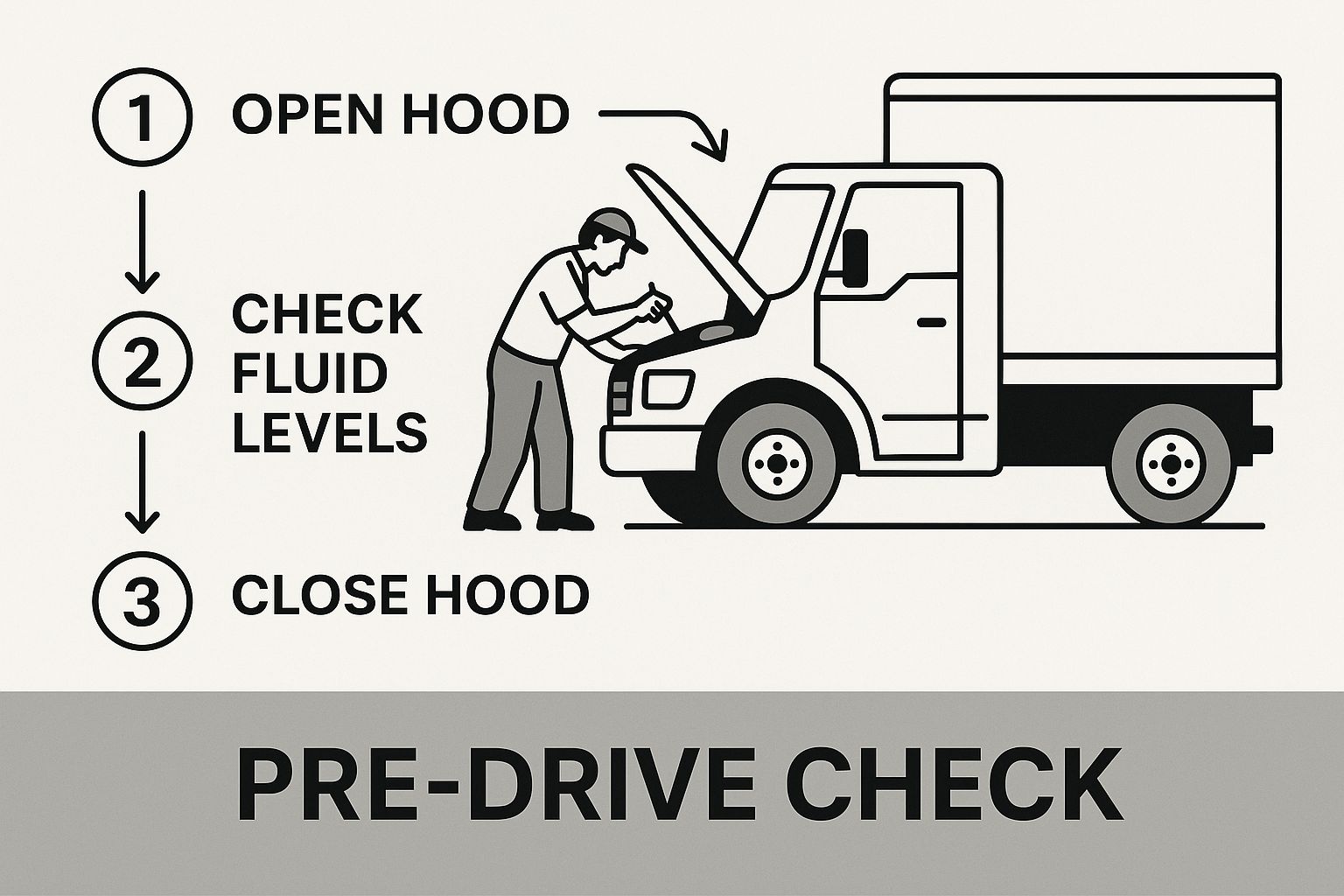
This image underscores that a daily vehicle check sheet entails more than just routine tasks. It involves confirming the core operational integrity of the vehicle before it even departs the premises. Incorporating these straightforward checks can prevent up to 30% of costly breakdowns occurring on the road, with many caused simply by low fluid levels. By identifying these concerns early, substantial savings in time and money on emergency repairs can be achieved.
Essential Items Every Driver Should Check
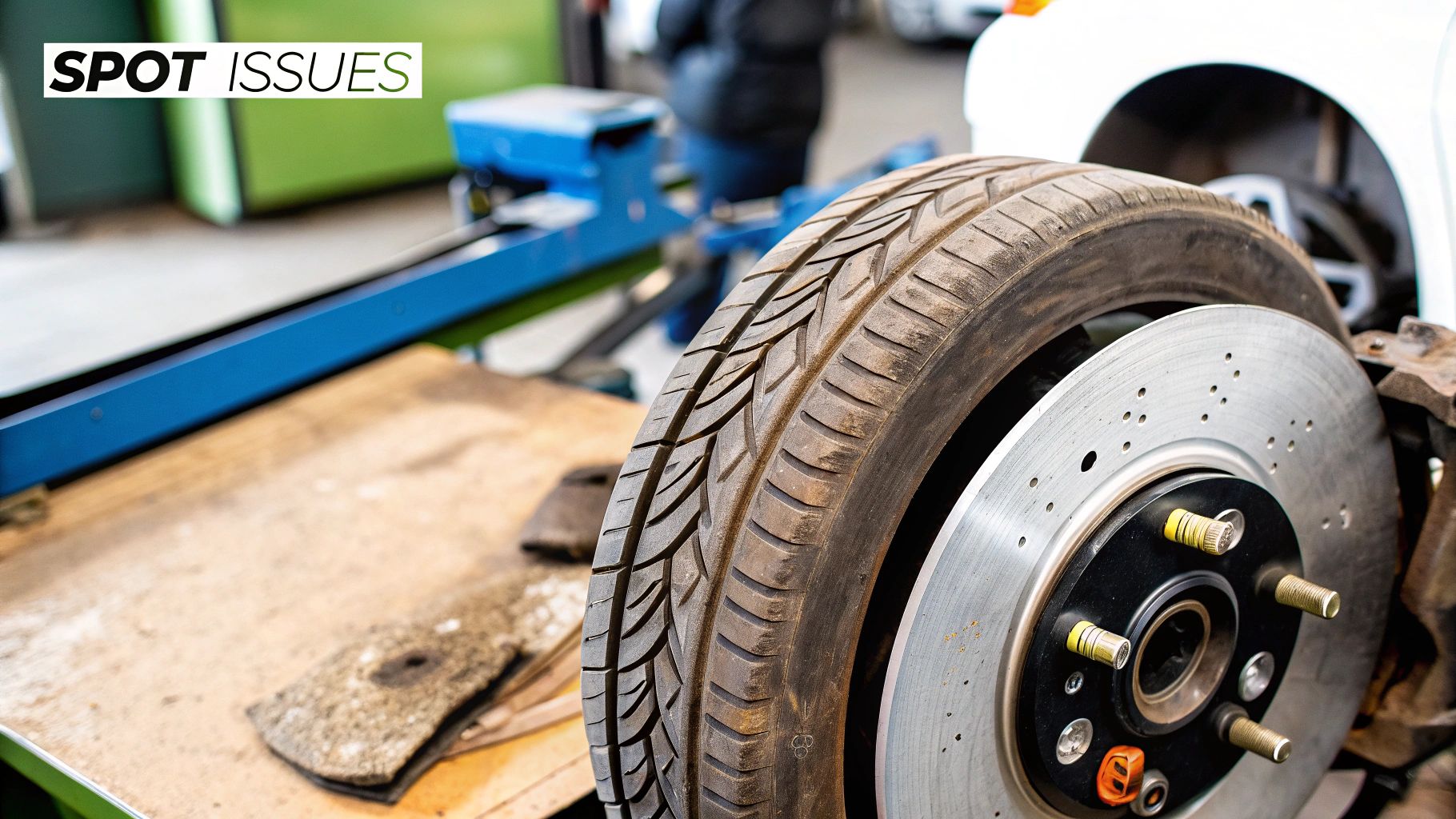
A well-structured daily vehicle check sheet lays the groundwork, but its real value comes from the driver’s ability to interpret observations, rather than merely ticking boxes. Developing an instinct for recognising what looks, feels, and sounds correct is vital. A novice driver may only confirm that a tyre has air, whereas an experienced one will notice subtle signs of low pressure or uneven wear that may indicate a more serious alignment problem. This keen awareness transforms a routine inspection into a meaningful safety assessment.
Recognising these subtle signals is crucial. While a dashboard warning light is a clear indicator of an issue, what about the quieter warnings? A slight pull to one side when braking, a new vibration in the steering wheel, or an unusual smell from the engine bay could signify impending failure. Encouraging drivers to trust their instincts and report these “gut feelings” can help avert significant breakdowns and hazardous situations. It is the distinction between identifying a failing alternator at the first sign of a light flickering and being stranded on a dark road with a dead battery.
Fluids, Warnings, and Subtle Signs
After completing the walkaround, the in-cab and under-bonnet checks are where emerging issues can often be detected before they escalate.
- Fluid Levels and Condition: It’s insufficient to merely verify that the oil level is within the min/max marks. What is the oil’s colour? If it appears black and gritty, it likely requires servicing. Is the coolant level consistently low? This could indicate a slow leak that should be addressed before it leads to overheating.
- Warning Lights: Each driver must understand the implications of every dashboard light. An engine management light may not halt the vehicle immediately, but it indicates a fault that could worsen and impact fuel efficiency or emissions. Conversely, a brake system warning light is a clear “stop now” signal. Grasping these distinctions is vital for safety.
- Listening and Feeling: Before setting off, drivers should take a moment to listen to the engine. Does it sound rougher than it did yesterday? When pressing the brakes initially, does the pedal feel spongy or travel unusually far? These sensory checks often provide the earliest indication of underlying issues.
Identifying these indicators is only half of the challenge; having the appropriate equipment to either confirm a problem or make a quick repair is equally important. For further details, you may find our guide on the top 10 tools for a vehicle safety checklist beneficial. A driver trained to observe, listen, and feel appropriately will always serve as the best defence against mechanical failures.
Legal Requirements That Actually Apply to You
Let’s be straightforward: legal terminology can be a real headache. However, understanding your responsibilities regarding the daily vehicle check sheet is non-negotiable. This is more than just completing forms; it is an integral part of your legal duty of care as a commercial operator. Under your Operator’s Licence, you must have a robust system to ensure that your vehicles are roadworthy prior to embarking on any journey.
Consider this: the law focuses less on specific rules and more on whether you have undertaken sensible and practical steps to prevent accidents caused by vehicle faults. This applies universally, whether you operate a fleet of HGVs or manage a couple of vans for your business. Picture a scenario where one of your vehicles is involved in an accident; if it is discovered that a malfunctioning brake light or a tyre worn below legal limits was present, and the fault should have been detected in a pre-use check, you could face serious repercussions. This means penalty points on the driver’s licence, substantial fines for your business, and a potential investigation by the Traffic Commissioner into your entire operation.
Document Retention and Roadside Inspections
What does this look like in practice? Firstly, it is vital to retain your completed check sheets. The ideal practice is to keep them for at least 15 months, providing a history that clearly demonstrates your commitment to safety. If you are pulled over for a roadside inspection, a DVSA officer has the right to request proof of your daily checks. A missing or hastily filled form raises immediate concerns about your attitude towards safety.
These checks represent your first line of defence against becoming a statistic. Recent UK government data on vehicle excise duty evasion highlights a concerning number of vehicles on our roads that may be lacking proper documents, such as MOTs or safety inspections. While this report addresses tax compliance, it illustrates the prevalence of uninspected, potentially unsafe vehicles. Your meticulous daily checks distinguish your professional operations from this risk. You can explore the government’s findings on vehicle compliance to gain a broader understanding.
Ultimately, these legal obligations are all about ensuring safety. For anyone managing larger vehicles, getting these details correct is essential. We discuss this thoroughly in our complete guide to HGV compliance, which is invaluable for specifics related to heavy goods vehicles.
Digital vs Paper: Which System Actually Works Better
The decision to utilise a clipboard versus an app for your daily vehicle check sheet is one every modern operator faces. It’s easy to presume that digital systems are inherently superior, yet the best system is the one that aligns with your operations—both for drivers and your administrative team—without introducing unnecessary complexities. Relying on paper doesn’t imply outdated practices; for a small fleet with a handful of vehicles, an organised paper system may be simple, cost-effective, and entirely functional.
However, as your fleet expands, the limitations of paper become apparent. Picture this scenario: you undergo a DVSA audit and need to retrieve a specific check sheet from six months prior, forcing you to sift through filing cabinets filled with paper. Now contemplate typing the vehicle registration into a search bar and instantly accessing the report. The efficiency improvement is significant. In fact, businesses that transition to digital checks often report up to 50% less time spent on compliance-related administration alone, allowing you to reallocate that time towards business growth instead of paperwork management.
Practical Realities: Speed, Storage, and Accountability
Consider a hypothetical situation. A driver completes a paper check and notes a tyre with low pressure. That paper report remains with them until they return to the depot, which could be many hours later—by which time, that minor issue could escalate into a dangerous tyre failure.
With a digital system, as soon as the driver flags the defect and captures a quick photo, an alert can notify the transport manager immediately. This real-time reporting enables you to proactively coordinate with a mobile technician who can meet the driver en route, preventing costly downtime and addressing significant safety concerns.
This immediate communication also enhances accountability. You eliminate disputes regarding whether a report was submitted or received. Digital systems provide a clear, time-stamped audit trail showing exactly when a check was completed, what was reported, and when the defect was resolved. This approach fosters efficiency while also promoting a robust safety culture. For further insights, consider reading our article on why paperless fleet systems are critical for compliance.
To assist you in evaluating your options, here’s a straightforward comparison between the two approaches.
Digital vs Paper Check Sheet Comparison
This comparison outlines features, costs, and suitability for different operational sizes.
| Feature | Paper System | Digital System | Best For | Implementation Cost |
|---|---|---|---|---|
| Real-Time Reporting | No. Delays until vehicle returns. | Yes. Instant defect alerts. | Time-sensitive repairs, high-risk operations | Low |
| Data Storage | Physical filing cabinets. | Secure cloud storage. | Businesses needing quick access for audits | High (can be) |
| Audit Trail | Manual, can be lost or damaged. | Automatic, time-stamped, and secure. | Proving compliance, accountability | Low |
| Media Attachments | No. Written descriptions only. | Yes. Photos & videos of defects. | Clear and undisputed fault reporting | Low |
| Cost Per Check | Low (cost of paper and ink). | Very low (part of a subscription). | High-volume daily checks | Very Low |
| Upfront Cost | Minimal (printer, paper). | Can be higher (software subscription, devices). | Small fleets with <5 vehicles | Low |
| Scalability | Poor. Admin burden grows with fleet size. | Excellent. Easily handles fleet growth. | Growing businesses and large fleets | High (can be) |
While a paper-based system is typically less expensive initially, the long-term advantages of a digital solution—such as enhanced safety, decreased administrative burdens, and a solid audit trail—can yield a far greater return on investment, especially as your enterprise grows. Ultimately, this decision facilitates a transition from a reactive to a proactive approach, which is essential in effective fleet management.
Getting Everyone to Actually Use Your Check Sheet
You may have crafted the ideal daily vehicle check sheet, yet ensuring its daily use among your team can present a significant challenge. This is often where well-established plans begin to falter. The real obstacle lies not in creating the form itself but in overcoming the real-world hurdles that make a quick check seem excessively time-consuming. Drivers are typically eager to hit the road, meaning that any added step can feel like an unnecessary delay. The key is to simplify the process to the extent that forgoing it appears to be the greater problem.
One highly effective strategy is to integrate the check directly into the driver’s morning routine. Certain companies might require drivers to complete the digital check before receiving the keys or the first job sheet. This small adjustment transforms the check from a mere suggestion to the essential starting point for the day. This approach is not about enforcing compliance but rather establishing a clear, logical sequence: complete the safety check, then commence the journey. It also neatly addresses the classic excuses of “I forgot” or “I ran out of time.”
Fostering a Culture of Ownership
Simply instructing your drivers to perform the checks is insufficient; you must foster their belief in the process. They are the frontline personnel, and their engagement is vital for the system to function effectively.
- Make it a Conversation: Avoid merely announcing a new policy from the top down. Involve your drivers in the process by soliciting their feedback regarding the check sheet. They often have valuable, practical insights based on the specific vehicles they operate and the routes they drive. This collaborative approach nurtures a sense of ownership.
- Show, Don’t Just Tell: When a driver reports a fault and it is resolved, follow up with a quick message acknowledging their good observation, such as, “It was a great catch on that brake light; we’ve taken care of it.” This demonstrates that their checks have tangible value, creating a feedback loop that recognises their efforts. Positive reinforcement proves far more effective than punitive measures.
- Use Incentives Wisely: Although not every business benefits from this, small incentives can significantly improve participation. It doesn’t necessarily have to be a hefty cash prize. A simple ‘Driver of the Month’ award, recognising those who conduct consistent and detailed checks, can ignite healthy competition and offer deserved recognition.
Ultimately, the aim is to shift the perspective of the daily vehicle check sheet from a mere exercise in compliance to a critical tool that protects the driver, the vehicle, and the public. When drivers understand that their reports prevent breakdowns, circumvent fines, and ensure their safety, adherence to the checks becomes a matter of professional pride. This focus on driver engagement is essential to ensure your system remains effective not just on day one, but for years to come.
Troubleshooting Problems and Improving Your System
Despite having a well-structured daily vehicle check sheet, complications may still arise. You might notice drivers completing only half of the form or recurring minor defects slipping through the cracks. While it’s easy to feel frustrated, these issues provide valuable feedback revealing where your system may require some refinement.
Avoid blaming your drivers if you notice incomplete reports. Instead, delve into the underlying reasons. Is the check taking too long during the morning rush? Is there an item on the list that confuses them? Often, a simple conversation with your team can uncover straightforward solutions, such as rewording a query or breaking a more complex check into manageable steps.
Another frequent issue is maintaining high check quality over time. The initial excitement for a new process can fade. To combat this, keep the system dynamic and relevant. Running regular, brief “toolbox talks” is an excellent strategy. Spending just five minutes focusing on a specific item, like “what to look for in tyre walls,” and sharing practical experiences from other drivers can reinforce training without being burdensome, ensuring safety remains a priority for everyone.
Scaling and Continuous Improvement
As your business expands, your checking system must evolve correspondingly. A process suitable for five vans will likely reveal flaws when you operate a mixed fleet of 20 vehicles. Stay vigilant for warning signs indicating that your system may require an update:
- An increase in minor roadside breakdowns: This often signifies that small issues are being overlooked during daily inspections.
- Workshop reports highlighting preventable defects: If mechanics are identifying faults that should have been spotted during daily checks, this is a clear signal that your process needs improvement.
- Escalating maintenance costs per vehicle: Proactive checks should lead to cost reductions over time; if expenses are rising, it indicates an underlying problem.
Treat your check sheet process as a living document that adapts with your needs. Plan to review it every six months or whenever you add a new vehicle type to your fleet. An effective daily check system significantly contributes to wider goals such as efficient equipment maintenance and workshop management, helping you identify trends and prevent costly failures before they take a vehicle out of service. This proactive mentality transforms a simple daily task into a pillar of a well-maintained, safe operation.
If you’re ready to advance beyond paper and spreadsheets, Pocket Box streamlines your checks, providing real-time defect reporting, automated compliance tracking, and total control over your fleet’s safety. Discover how Pocket Box can help you create a smarter, safer operation.


