

At its most basic, fleet management telematics is the technology that gives businesses a complete, real-time picture of their vehicles and other mobile assets. Think of it as a central nervous system for your entire fleet. It lets you see precisely where every vehicle is, check its health, and understand exactly how it’s being used at any given moment.
What Exactly Is Fleet Management Telematics?
Let’s try an analogy. Imagine your fleet is a team of players on a football pitch. Without telematics, you only know their starting positions and have to trust they’re following the game plan. But with fleet management telematics, you’re the manager with a live, bird’s-eye view of the entire match. You can track every player’s exact position, speed, and even their condition, all in real time.
This incredible level of insight comes from a small device, often called a “black box,” installed in each vehicle. This device is the data hub, constantly collecting information and sending it straight back to your central management software.
The Journey From Vehicle to Screen
The whole process is surprisingly simple, yet the results are profound. It all starts with that in-vehicle device collecting critical data points. This information is then sent securely over a mobile network, almost exactly like how your phone sends a text message.
Once the data arrives, the telematics software gets to work. It translates all that raw data into easy-to-digest reports, alerts, and dashboard visuals. Suddenly, a jumble of numbers becomes genuinely useful intelligence. A sudden stop is flagged as a “harsh braking event,” and high engine revs while stationary trigger an “idling alert.”
This translation from raw data to actionable insight is where the magic really happens. The system isn’t just about putting dots on a map; it’s about giving you the context you need to make smarter, faster, and more cost-effective decisions for your business.
The term “telematics” itself is a mash-up of two words: telecommunications and informatics. It’s the science of sending, receiving, and storing information related to remote objects—in this case, your vehicles.
What Data Does Telematics Actually Capture?
The sheer amount of data gathered is what makes the system so powerful. It provides a full picture of both the vehicle’s performance and the driver’s activity. While every system is slightly different, most will track these core metrics:
- GPS Location: Pinpoint a vehicle’s current location, review its historical routes, and get alerts when it enters or leaves a designated area (geofencing).
- Engine Diagnostics: Keep an eye on fault codes and engine hours. This means you get maintenance alerts before a small issue turns into a costly breakdown.
- Driver Behaviour: Monitor key safety metrics like speeding, rapid acceleration, harsh braking, and sharp cornering.
- Fuel Consumption: Accurately measure fuel usage and time spent idling, highlighting clear opportunities for some serious cost savings.
- Vehicle Status: Confirm things like whether the ignition is on or off, the battery voltage, and even if a seatbelt is being used.
This rich dataset is the bedrock of modern fleet management. It shifts your operations from reactive problem-solving to proactive, data-driven strategy, giving you the visibility you need to get a firm grip on costs and boost efficiency.
How a Modern Telematics System Actually Works
To really get to grips with what fleet management telematics can do, it helps to pull back the curtain and see how the different parts work together. I like to think of it as a three-part symphony: data is gathered by hardware in the vehicle, sent out over a network, and then decoded by smart software. Each stage is vital for turning raw vehicle data into insights you can actually use to run your business better.
It all starts with a small, discreet device fitted inside each vehicle. You might have heard it called a “black box.” This little unit is the system’s eyes and ears on the ground, and it’s the foundation for everything else that follows.
This hardware is your source of truth, capturing what’s happening on the road and translating it into a digital language for analysis.
The In-Vehicle Data Collector
At the very core of the system is the telematics device itself. This is usually plugged straight into the vehicle’s On-Board Diagnostics (OBD-II) port, though some are hardwired for a more permanent fit. Its main job is simply to listen and record.
Inside this box, a few key components work in tandem:
- GPS Receiver: This is the what and where. It pinpoints the vehicle’s precise location, how fast it’s going, and its direction of travel.
- Engine Interface: By tapping into the vehicle’s brain—the engine control unit (ECU)—it can pull crucial data like fuel consumption, engine hours, and any diagnostic fault codes.
- Accelerometer: This sensitive bit of kit feels movement. It detects sudden changes, flagging things like harsh braking, sharp cornering, or rapid acceleration.
This combination of hardware paints a really detailed picture, capturing much more than just a dot on a map. It gives you a clear view of both the vehicle’s health and the driver’s behaviour, providing all the raw material needed for the software to work its magic.
The demand for this technology is surging. The UK fleet management market was valued at around £3.21 billion and is projected to nearly double to £6.44 billion by 2032. That’s a compound annual growth rate (CAGR) of 9.1%, indicating just how much businesses rely on telematics to stay competitive. You can read more about this impressive market growth on Data Bridge Market Research.
To help clarify what each part does, here’s a quick breakdown of the key components.
Table: Key Telematics System Components and Their Functions
| Component | Primary Function | Data Collected |
|---|---|---|
| GPS Receiver | Pinpoints vehicle location and movement | Latitude/longitude, speed, direction, altitude |
| Engine Interface (ECU) | Monitors vehicle health and performance | Fuel consumption, odometer readings, engine hours, fault codes |
| Accelerometer | Detects driving behaviour and incidents | Harsh braking, rapid acceleration, cornering, impacts |
| SIM Card & Modem | Transmits collected data to the server | All captured data sent over a mobile network |
| Fleet Management Software | Processes, analyses, and visualises data | Dashboards, reports, alerts, historical route playback |
These components form a seamless loop, from data capture in the vehicle to actionable insights on your screen.
Transmission and Analysis: The Software Brain
Once the data is collected, it needs to go somewhere useful. The telematics device uses a built-in SIM card and modem to send this stream of information over a mobile network to a secure, cloud-based server. This happens in almost real-time, so the information you’re looking at is always fresh.
This is where the fleet management software platform comes into play. It acts as the central command centre for your entire operation. It takes all that raw data pouring in from every vehicle and turns it into something you can understand and act on, usually through a central dashboard.
This diagram shows how these different pieces of the puzzle fit together.
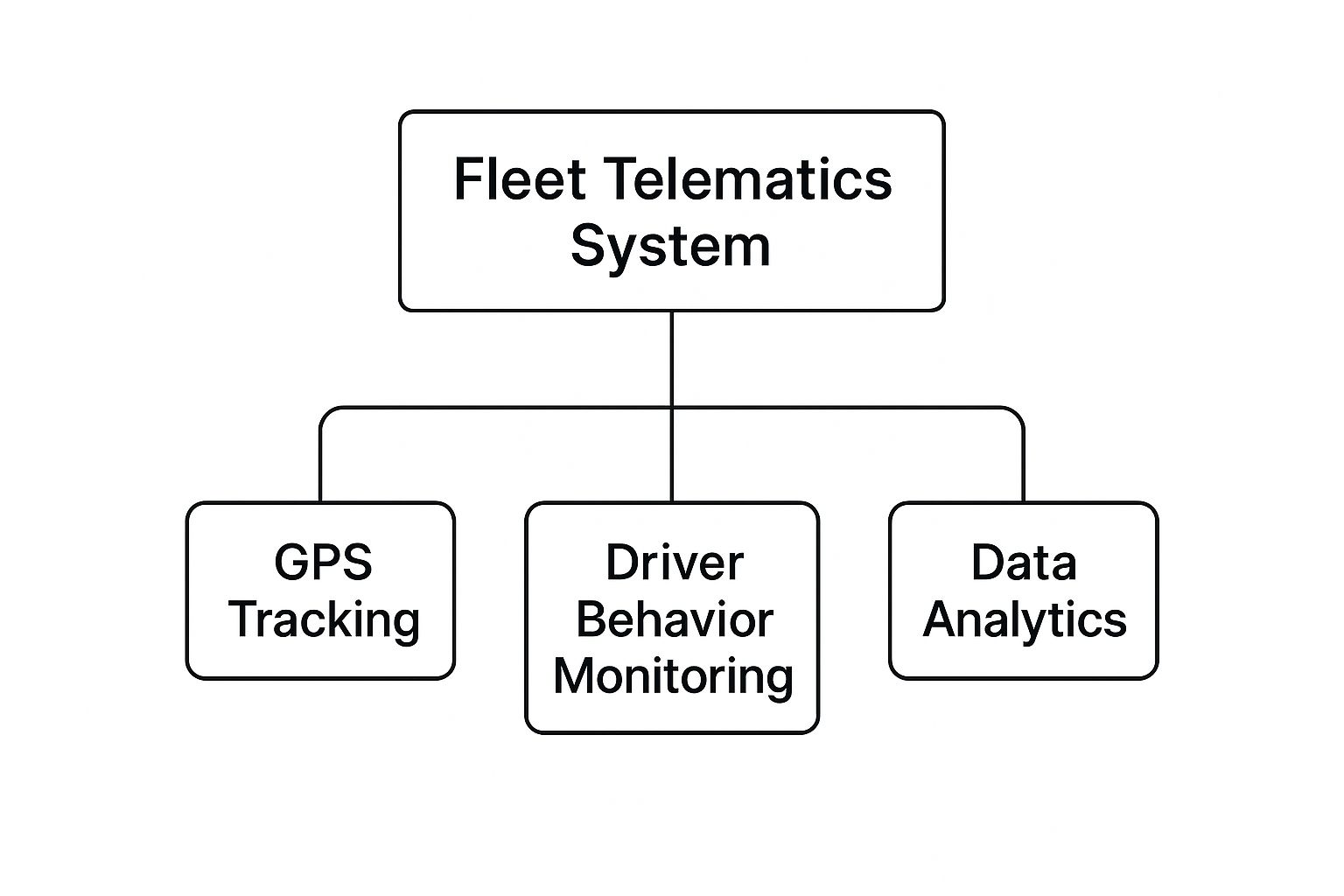
As you can see, it all flows from tracking and monitoring the vehicles to generating powerful analytics that drive decision-making.
A modern telematics platform does more than just show you data. It’s programmed to spot patterns, fire off alerts based on rules you set, and automatically generate reports. It turns a flood of numbers into real, actionable intelligence.
For instance, you could set up the software to send you an instant email or text if a driver goes over the speed limit, enters an area they shouldn’t (a feature known as geofencing), or if an engine fault code pops up. This proactive approach lets you tackle issues right away, instead of discovering them in a report weeks later. It’s this intelligent interpretation that makes telematics an essential tool for any modern fleet.
The Real-World Benefits of Adopting Telematics

It’s one thing to understand the technical side of fleet management telematics, but it’s another to see the direct impact it can have on your business. The real value isn’t just in gathering data; it’s about turning that information into tangible results that strengthen your entire operation.
For UK businesses, these benefits aren’t just abstract ideas—they are measurable improvements that ripple through everything from daily cash flow to long-term strategy. We can break them down into three core pillars: slashing operational costs, boosting efficiency, and fundamentally enhancing driver safety.
By zeroing in on these key areas, telematics delivers a clear and compelling return on investment. It stops being a simple tracking tool and becomes a central part of your business strategy.
Drastically Reducing Operational Costs
The most immediate and powerful impact of telematics is often felt on the balance sheet. Fleet expenses, especially fuel and maintenance, can be a constant headache—unpredictable and difficult to get a handle on. Telematics gives you the granular oversight needed to bring these costs firmly under your control.
Fuel is almost always one of the biggest line items for any fleet. Telematics gives you precise data on consumption, letting you pinpoint which vehicles or drivers are burning through the most. It highlights costly habits like excessive idling, where you’re literally burning money for no reason. By setting alerts for idling that lasts more than a few minutes, managers can tackle the issue directly and make significant savings.
Predictive maintenance is another game-changer. Instead of relying on a rigid schedule or waiting for a breakdown, telematics monitors the actual health of your vehicles. It tracks engine hours, mileage, and diagnostic fault codes, alerting you to potential problems before they turn into expensive roadside failures. This proactive approach minimises unexpected downtime and keeps your vehicles on the road for longer.
Telematics transforms maintenance from a reactive, often expensive, process into a proactive, data-driven strategy. This shift alone can reduce maintenance costs by up to 30% by catching defects early and preventing major component failure.
Boosting Fleet Efficiency and Productivity
Beyond the direct cost savings, telematics unlocks new levels of operational efficiency. It gives you the visibility needed to ensure every asset is being used to its full potential, cutting out wasted time, mileage, and resources.
Smarter routing is a perfect example. With real-time GPS tracking, you can see your entire fleet on a single map. This means dispatchers can send the nearest driver to a new job, slashing travel time and fuel costs. What’s more, advanced systems can optimise routes with multiple stops to be as efficient as possible, even factoring in live traffic to avoid delays.
This enhanced visibility also helps you get more out of your assets. You can spot which vehicles are being overused while others sit idle, allowing you to balance the workload across the fleet. It also helps prevent unauthorised vehicle use, ensuring your assets are only used for company business, which reduces wear and tear and liability. For a closer look at these advantages, you can explore the many real-world benefits of telematics for fleet management in our detailed guide.
These efficiency gains have a fantastic ripple effect, leading to:
- Faster Response Times: Getting the closest vehicle to a customer improves service and keeps them happy.
- More Jobs Per Day: Efficient routing means each driver can fit more work into their shift.
- Accurate Invoicing: Proof-of-service reports confirm exactly when a driver arrived and left a site, eliminating disputes.
Enhancing Driver Safety and Ensuring Compliance
A fleet’s most valuable assets are its drivers. Telematics provides powerful tools to encourage safer driving habits, reduce accident rates, and make sure you stay fully compliant with industry regulations.
The system keeps an eye on specific behaviours known to increase risk, like harsh braking, rapid acceleration, sharp cornering, and speeding. When these events happen, they’re logged, and can even trigger real-time alerts. This data allows for targeted driver coaching, so you can address specific issues using hard evidence, not guesswork.
This focus on safety has a direct financial upside. Safer driving leads to fewer accidents, which in turn brings down insurance premiums, repair costs, and vehicle downtime. It also helps protect your company’s reputation and, most importantly, ensures your drivers get home safely at the end of each day.
On top of that, telematics automates many parts of compliance. From digital vehicle checks that confirm roadworthiness to monitoring driver hours for regulatory adherence, the system provides a clear, auditable trail. This simplifies your record-keeping and means you’re always ready for an inspection, helping you avoid costly fines and penalties.
Solving Your Toughest Fleet Challenges
If you’re a UK fleet manager, you know the job is a constant juggling act. You’re wrestling with everything from unpredictable fuel prices and spiralling maintenance costs to the never-ending maze of compliance rules. These aren’t just small day-to-day headaches; they’re major hurdles that can seriously eat into your profits and efficiency.
This is where fleet management telematics comes in. It’s more than just another bit of tech—think of it as a strategic partner that gives you the data you need to get ahead of these problems, rather than just reacting to them.
With real-time data and clear insights, a good telematics system puts you back in the driver’s seat, helping you turn daily frustrations into genuine opportunities for a smarter, leaner operation.
Tackling Rising Fuel and Operational Costs
For most fleet operators in the UK, ballooning operational costs are public enemy number one. Fuel prices are a rollercoaster, vehicle maintenance is getting more complex, and buying new vehicles is a huge expense. Telematics helps you get a firm grip on these costs. By using GPS tracking and smart analytics, managers can map out the most efficient routes, leading to significant savings on fuel and a welcome reduction in emissions—a crucial factor as environmental regulations get stricter. You can read more about how UK fleets are tackling these issues on mantislive.com.
A modern telematics platform shows you exactly where every penny of your fuel budget is going. You can spot and stamp out expensive habits that might otherwise go completely unnoticed:
- Excessive Idling: Get an alert when a vehicle is left running for too long. This is a simple fix, but it allows you to coach drivers on better habits that can slash fuel waste.
- Inefficient Routing: Why let drivers rely on guesswork? The system can plan the smartest multi-stop routes, taking live traffic into account to dodge delays and cut out wasted miles.
- Unauthorised Use: Geofencing alerts you if a vehicle is used after hours or outside its designated area. This puts a stop to personal trips that add to your fuel bill and cause unnecessary wear and tear.
Having this level of detail at your fingertips means you can make decisions based on hard facts, directly cutting down your single biggest variable cost.
Simplifying Complex Maintenance Schedules
Keeping a whole fleet of vehicles safe, legal, and on the road is a huge logistical challenge. Trying to manually track MOTs, services, and repairs for every single van or lorry can quickly turn into a nightmare, often resulting in expensive downtime when a vehicle is unexpectedly out of action.
Fleet management telematics takes the headache out of this whole process. It acts like a digital fleet assistant, automating your maintenance schedule and making sure nothing ever gets missed.
The system plugs directly into a vehicle’s engine diagnostics, giving you a live feed of its health. This unlocks a whole new level of control:
- Automate Service Reminders: Set up custom alerts based on mileage, engine hours, or calendar dates. You’ll get a heads-up well before a service, MOT, or inspection is due.
- Receive Real-Time Fault Codes: If an engine warning light comes on, you’ll know about it instantly—not just the driver. This lets you diagnose the issue remotely and book a repair before it turns into a costly breakdown.
- Digitise Vehicle Checks: Drivers can complete their daily walkaround checks on a simple mobile app. Any defects are flagged to you immediately, creating a paperless audit trail and ensuring problems are sorted straight away.
This proactive approach makes a huge difference. It drastically reduces unplanned downtime, helps you catch problems early to cut repair bills, and ultimately extends the life of your vehicles. Our in-depth guide to fleet telematics explores how you can tailor these systems to fit your specific needs.
Improving Driver Performance and Retention
Your drivers are the backbone of your business, but it’s tough to manage performance and ensure safety when your team is always on the move. Telematics gives you the objective data needed to support them properly.
By tracking key metrics like speeding, harsh braking, and sharp acceleration, you can pinpoint risky or inefficient driving habits. This isn’t about playing ‘big brother’; it’s about coaching. The data allows you to have constructive, evidence-based chats with your drivers about how they can improve.
Many systems even include driver scorecards or leaderboards, which can add a bit of friendly competition to encourage safer and more fuel-efficient driving. When you invest in your drivers’ safety and give them clear, fair feedback, you’re doing more than just reducing accident rates and insurance costs. You’re building a culture of professionalism and respect—and that’s a powerful tool for holding onto your best people.
Your Step-By-Step Implementation Plan
Bringing a new bit of tech into your operation can feel like a mountain to climb, but getting a fleet management telematics system up and running is perfectly doable with a clear, structured plan. If you break it down into manageable chunks, you can ensure a smooth transition that causes minimal disruption and starts delivering value from day one.
The real trick is to work methodically. Start with your big-picture goals and drill down into the nitty-gritty of installation and training. This approach makes sure everyone is on the same page and the system is set up to solve your specific business headaches.
Define Your Goals and Select a Provider
Before you even glance at a brochure, you need to define what a “win” looks like for your fleet. What are the biggest issues keeping you up at night? Are you desperately trying to cut fuel costs, improve driver safety, or just get a better handle on your maintenance schedule?
These primary objectives will be your compass, guiding every decision you make from here on out. Having clear, measurable goals is the only way to choose a provider whose platform genuinely excels in the areas that actually matter to you.
Once you know what you’re aiming for, you can start weighing up potential providers. Think of this as finding a partner, not just a supplier. Here’s what to look for:
- Feature Alignment: Does their software have the specific tools to hit your targets? Think advanced fuel reporting, driver scorecards, or automated maintenance alerts.
- Scalability: Can the system grow with you? You might add more vehicles down the line or want to integrate with other software. You don’t want to be stuck with a system you’ll outgrow in a year.
- Support and Training: How much help will they give you during setup, and what’s their customer service like long-term? A solid support system is absolutely vital.
Plan the Installation and Configuration
With a provider chosen, the next phase is all about careful planning to get the hardware installed and the software configured properly. Your number one priority here should be to minimise vehicle downtime. Your operations need to keep rolling.
Work closely with your provider to map out a staggered installation schedule. This could mean fitting devices during evenings, weekends, or when vehicles are already in for scheduled servicing. The goal is to avoid taking them off the road during peak hours.
As you build out your plan, think about the ongoing running costs, especially for data transmission. Implementing effective telecom expense management strategies from the start will keep your telematics solution cost-efficient for the long haul.
Key Insight: A successful telematics implementation is 70% planning and 30% technology. Taking the time to properly configure alerts, reports, and user access from the outset will save you countless headaches later on.
After the hardware is in, you can get the software set up. This is where those goals you defined earlier come right back into focus. Set up custom alerts for things like excessive idling or speeding, and create automated reports that drop the key numbers you need straight into your inbox.
Train Your Team and Communicate with Drivers
This is the final, and arguably most critical, step: getting your team on board. Technology is only as good as the people using it. They need to know how to use it and, just as importantly, why it’s being introduced. This requires a two-pronged approach for managers and drivers.
For your office staff, arrange comprehensive training on the software platform. They need to know how to pull reports, make sense of the data, and use all the features to manage the fleet effectively.
For your drivers, communication is everything. It is absolutely essential to frame telematics as a tool for safety and efficiency, not a “Big Brother” surveillance system. Adoption is growing across the UK for a reason, with a 3% year-on-year increase in the use of these systems across car and van fleets. This isn’t just a niche technology anymore.
Highlight what’s in it for them directly:
- Protection from False Claims: Dashcam and telematics data can be their best defence, proving they weren’t at fault in an accident.
- Fair Performance Reviews: Objective data can be used to recognise and reward great driving, removing any guesswork.
- Less Admin Hassle: Digital vehicle checks and automated mileage logs mean less paperwork and more time on the road.
By clearly explaining the benefits and providing proper training, you can build a culture of acceptance. You might even turn your drivers into the biggest champions of the new system.
What’s Next for Fleet Telematics? A Look Ahead
The world of fleet telematics doesn’t sit still. The technology is getting smarter and more connected all the time, delivering insights that would have seemed like science fiction just a few years ago. For any fleet manager, keeping an eye on these changes isn’t just about being curious—it’s about future-proofing your business and keeping that competitive edge.
The next generation of telematics is being driven by some serious heavy-hitters: artificial intelligence (AI), the massive shift to electric vehicles (EVs), and the need to connect all our business systems together. These trends are pushing the industry far beyond simple dots on a map and into the territory of real operational intelligence.
The Rise of AI and Predictive Analytics
Artificial intelligence is what turns telematics from a reactive tool into a proactive one. Instead of just telling you what’s already happened, AI and machine learning algorithms can sift through mountains of data to predict what’s likely to happen next. This is a massive leap forward, particularly when it comes to maintenance and safety.
Predictive maintenance is the perfect example. An AI-powered system can look at everything from engine data and past repair logs to weather conditions, and then flag a component that’s likely to fail—before it actually breaks down. This means you can get the vehicle into the workshop on your own terms, dodging those expensive roadside breakdowns and getting more life out of your assets.
AI is also making risk analysis much sharper. By digging into driving habits, route data, and previous incidents, these systems can spot high-risk situations and pinpoint drivers who might benefit from some extra coaching. It allows you to step in with targeted training that genuinely improves safety on the road.
The Electric Vehicle Transition
As more UK fleets make the switch to electric, telematics has become an absolutely vital tool for managing these new assets. Running an EV fleet throws up unique challenges that older systems just can’t handle, but modern fleet management telematics platforms are more than up to the job.
Essential EV management features now include:
- Real-Time Battery Monitoring: Keeping a close eye on the state of charge (SoC) for every vehicle, making sure drivers always have the range to get the job done.
- Charging Optimisation: Managing charging schedules to cash in on cheaper off-peak electricity, which can make a huge dent in your energy bills.
- Battery Health Analysis: Tracking battery degradation over time to protect your most expensive asset and help you plan for its eventual replacement.
To put it simply, you can’t have a successful EV rollout without telematics. It provides the crucial data you need to tackle range anxiety, keep charging costs under control, and look after the long-term health of the battery.
A Single Source of Operational Truth
Finally, the future is all about integration. Telematics data isn’t stuck in its own little bubble anymore. Smart businesses are linking their telematics platforms with other key systems, like accounting software, CRMs, and maintenance management tools. You can learn more about how these systems work together in our guide to telematics fleet management.
When you connect everything, you create a single source of truth for your entire operation. A completed job in the field can automatically trigger an invoice in your accounts software. This joined-up approach breaks down the walls between departments, drives up efficiency, and gives you a true 360-degree view of your business.
At Pocket Box Ltd., we provide a digital command centre that brings all your fleet, asset, and compliance data into one smart platform. We help you eliminate paperwork, cut maintenance costs, and gain total control over your mobile operations. Discover how you can run a safer, smarter, and more efficient fleet by visiting https://pocketbox.co.uk today.


